Why do some websites glide to the top of Google while others never leave page ten? Usually it is not luck. It is a repeatable process, and the steps of SEO make that process easy to follow.
This guide uses a simple, repeating pattern for every stage: the big idea, what to do, what to avoid, and one quick win. Grab a coffee and skim at your own pace.
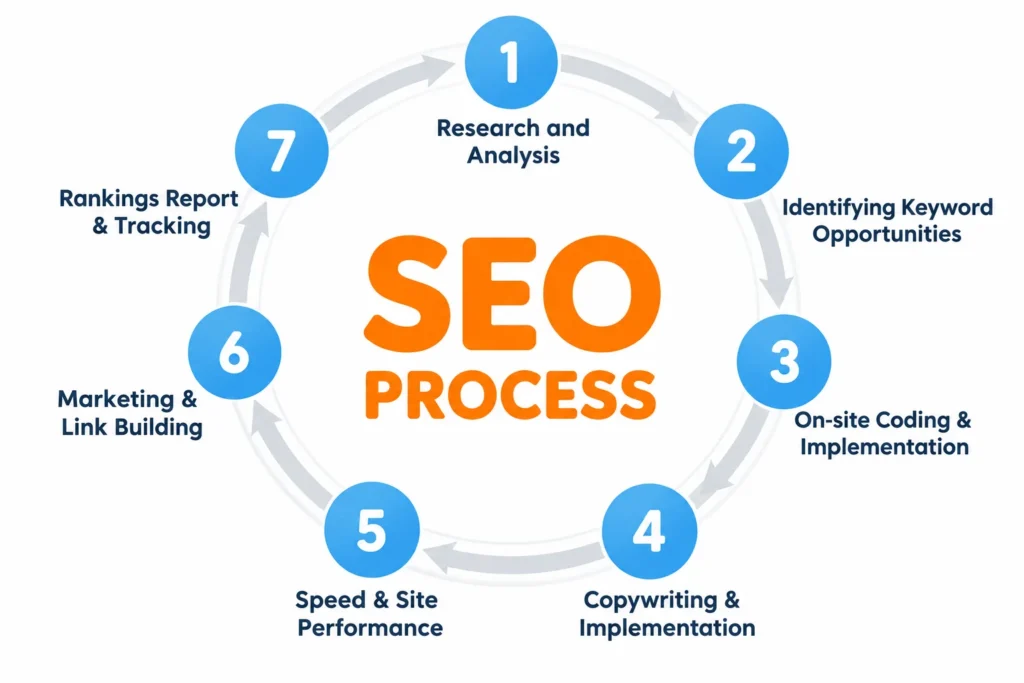
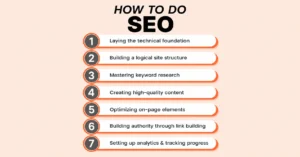
Quick Snapshot: The Steps of SEO at a Glance
Here is the whole roadmap in one place before the details begin.
- Step 1: Set goals and understand the audience
- Step 2: Research keywords and search intent
- Step 3: Optimize on-page elements
- Step 4: Create high-quality content
- Step 5: Fix technical issues
- Step 6: Build quality backlinks
- Step 7: Track, measure, and improve
Step 1: Set Goals and Know Your Audience
The Big Idea
Every winning campaign starts with a purpose. Without a clear target, even the best tactics feel random.
Do This
- Write down one or two measurable goals, such as more leads or higher sales
- Create a simple profile of the ideal visitor, including their problems and questions
- Read customer emails, reviews, and social comments to learn their language
- Check the top-ranking pages for your topic to see what Google already rewards
Avoid This
- Chasing “more traffic” without defining what visitors should do
- Guessing what the audience wants instead of listening to them
- Copying competitors line by line
Quick Win
Spend fifteen minutes reading customer reviews. Real phrases often become the best headings and keywords later.
Step 2: Research Keywords and Search Intent
The Big Idea
Keywords connect what people type with what a website offers. Choosing them well is one of the most important steps of SEO, because every later decision builds on them.
Do This
- Use free tools like Google Keyword Planner, Google Trends, and the “People also ask” box
- Mix short keywords with longer, more specific phrases
- Match each page to one clear search intent: learn, compare, or buy
- Group related keywords into clusters and assign each cluster to a single page
- Track everything in a simple spreadsheet
Avoid This
- Targeting only high-volume terms that are far too competitive
- Putting several pages up against each other for the same phrase
- Ignoring what the search results actually show
Quick Win
Type your main keyword into Google and study the first page. If the top results are guides, write a guide.
Step 3: Optimize On-Page Elements
The Big Idea
On-page work polishes what visitors and search engines notice first. Small tweaks here often bring surprisingly fast results, and they rank among the friendliest steps of SEO for beginners.
Do This
- Write a unique title tag under 60 characters with the main keyword near the front
- Craft a short, enticing meta description that earns the click
- Use one H1, then logical H2 and H3 headings
- Place the main keyword naturally in the first paragraph
- Keep URLs short and descriptive
- Compress images and add clear alt text
- Add a few helpful internal links to related pages
Avoid This
- Duplicate titles across multiple pages
- Stuffing the same keyword into every heading
- Uploading huge, uncompressed photos
Quick Win
Rewrite one dull title tag today so it promises a clear benefit. Then watch the click-through rate over the next month.
Step 4: Create High-Quality Content
The Big Idea
Google’s systems aim to surface helpful, people-first pages. Writing content that truly solves a problem is among the most rewarding steps of SEO.
Do This
- Answer the main question early, then add depth
- Use simple language and short paragraphs
- Include examples, personal experience, or original insight
- Break up text with bullets, bold highlights, and relevant images
- End with a clear next step, such as reading a related post or subscribing
- Refresh older articles with new facts and better examples
Avoid This
- Padding articles just to reach a word count
- Copying or lightly rewording other websites
- Publishing thin pages with no real answers
Quick Win
Pick your oldest popular post and update its statistics, examples, and intro. Fresh content sends a positive signal.
Step 5: Fix Technical SEO Issues
The Big Idea
Brilliant content still struggles on a slow or broken site. Technical SEO is the foundation, and skipping it is one of the costliest mistakes among the steps of SEO.
Do This
- Make the design mobile-friendly, since most searches happen on phones
- Aim for pages that load within a couple of seconds
- Use HTTPS to protect visitors and build trust
- Submit an XML sitemap and keep robots.txt clean
- Fix broken links and redirect chains
- Add structured data for features like FAQ snippets and star ratings
- Check Google Search Console regularly for crawl and indexing errors
Avoid This
- Blocking important pages by accident
- Ignoring mobile testing
- Letting duplicate pages pile up
Quick Win
Run your homepage through Google PageSpeed Insights. Fix the top two suggestions first.
Step 6: Build Quality Backlinks
The Big Idea
Backlinks are links from other websites to yours, and Google treats them like votes of confidence. Earning good ones remains a key part of the steps of SEO.
Do This
- Create guides, original research, or free tools worth linking to
- Guest post on relevant, respected blogs
- Share expertise in interviews, podcasts, and expert roundups
- Send polite, personalized outreach emails
- Build genuine relationships with bloggers, journalists, and peers
Avoid This
- Buying links or joining link schemes
- Collecting dozens of links from random directories
- Sending the same generic email to everyone
Quick Win
Find one broken link on a relevant website and suggest your page as a replacement. Helpful outreach tends to get replies.
Step 7: Track, Measure, and Improve
The Big Idea
SEO is never one-and-done. This final stage might be the most underrated of all the steps of SEO, because it turns guesses into decisions.
Do This
- Set up Google Analytics and Google Search Console
- Watch organic traffic, click-through rates, average rankings, and conversions
- Look for monthly patterns rather than daily ups and downs
- Polish pages sitting on page two, since small improvements can push them up
- Repeat the cycle regularly
Avoid This
- Panicking over short-term ranking dips
- Tracking vanity numbers that do not connect to goals
- Never revisiting published pages
Quick Win
List your five pages ranking between positions 8 and 20. Improve one each week.
Common Mistakes to Avoid
Many beginners rush through the steps of SEO and then wonder why results feel slow. These are the usual culprits:
- Keyword stuffing: Repeating a phrase makes text awkward and can hurt rankings
- Ignoring mobile users: A page that breaks on a phone loses visitors fast
- Chasing shortcuts: Bought links and auto-generated articles may spike briefly, then crash
- Forgetting updates: Outdated pages quietly lose ground over time
How Long Do the Steps of SEO Take to Work?
Patience is the hardest part. Most sites see noticeable movement within three to six months, though competitive topics can take longer.
Several factors shape the timeline:
- The age and authority of the website
- The strength of the competition
- The quality and consistency of the work
- The health of the site’s technical setup
The encouraging part is that results compound. Once the routine is in place, growth starts to feel almost automatic.
Weekly SEO Checklist
Small, regular effort beats occasional bursts of activity. A simple weekly routine might look like this:
- Publish or improve one piece of content
- Check Search Console for new errors
- Review top-performing and declining pages
- Build or pursue one new backlink
- Note one lesson learned from the data
Frequently Asked Questions
Is SEO free?
Learning and applying the basics costs nothing. Tools and outsourcing are optional extras, not requirements.
Can beginners do SEO without a developer?
Yes. Most on-page and content tasks are beginner-friendly. Only a few technical fixes may need extra help.
How often should content be updated?
A review every six to twelve months works well for most pages. Fast-changing topics may need more frequent attention.
Does social media help rankings?
Social shares are not a direct ranking factor. They can still bring visibility, which sometimes leads to links.
Conclusion
Ranking higher on Google is not about secret tricks. It is about following a clear process, staying consistent, and putting readers first.
By setting goals, researching keywords, optimizing pages, creating strong content, fixing technical problems, earning backlinks, and tracking results, any website can climb the rankings. Master these steps of SEO one at a time, and the results will follow.